In a crowded digital marketplace, content has become one of the most powerful tools for building trust, attracting targeted traffic, and driving conversions. Whether you are promoting affiliate products, selling digital services, or growing a personal brand, the ability to create content that influences purchasing decisions is an essential skill.
Consumers are constantly exposed to information overload. As a result, they trust brands that simplify choices, communicate value clearly, and demonstrate credibility. Effective content marketing is not simply about publishing posts consistently—it is about crafting messages that educate, persuade, and guide readers toward action.
This guide will explain actionable strategies to help beginners create high-converting content, build authority, and generate long-term results.
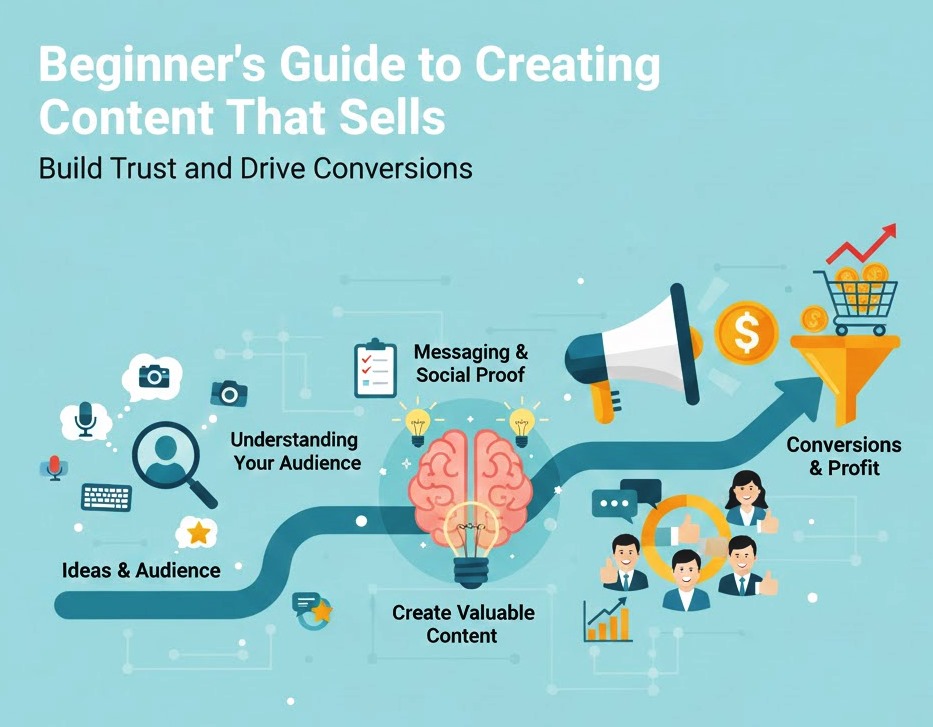
- Start With Your Audience, Not Your Product
The most common mistake beginners make is building content around products rather than people. Effective marketing begins with an understanding of your audience’s pain points, goals, and motivations.
Ask yourself:
- What problems are they trying to solve?
- What frustrates them about current solutions?
- What emotional triggers affect their buying decisions?
Instead of promoting a product with generic claims, position it as the logical solution to a specific problem. The more aligned your message is with audience needs, the easier it becomes to build trust and encourage conversions.
- Create Useful, Practical, and Actionable Content
The internet rewards content that provides real value. Whether you produce blog posts, videos, or social media threads, the focus should be on helping the audience achieve measurable progress.
Examples of valuable content:
- Step-by-step tutorials
- Checklists and templates
- Educational breakdowns
- Case studies and examples
Content that improves someone’s life—even slightly—creates positive brand association. When users trust your advice, they become more likely to trust your product recommendations.
- Make Your Messaging Simple, Clear, and Benefit-Driven
High-converting content is not about complicated language or industry jargon. Readers decide within seconds whether a piece of content is relevant to them.
To increase engagement:
- Use simple, direct language
- Highlight tangible benefits early
- Focus on outcomes, not features
For example:
Instead of saying, “This software has automated tracking features,”
say, “This software saves you hours every week by automating repetitive tasks.”
Clarity influences conversions more than cleverness.
- Use Social Proof to Build Credibility
Social proof remains one of the strongest drivers of consumer behavior. People naturally follow the choices of others, especially when uncertain.
Powerful forms of social proof include:
- Testimonials and reviews
- User success stories
- Data, metrics, or real-world results
You don’t need a massive brand to leverage social proof. Even a short customer quote such as “Saved me time and doubled my results in 30 days” can increase perceived value.
The key is authenticity. Consumers can detect exaggerated claims instantly.
- Tell Stories That Make People Feel Understood
Storytelling is one of the most effective ways to capture attention and build emotional connection. People don’t remember facts—they remember stories.
A good story includes:
- A relatable struggle
- A journey toward improvement
- A meaningful transformation
When readers relate to a story emotionally, they are more likely to trust your solution and perceive it as relevant to their lives.
Stories should illustrate how transformation is possible, not simply describe why a product is good.
- Optimize for Search Engines Without Sacrificing Readability
SEO plays a crucial role in long-term traffic generation. However, many beginners either ignore it completely or over-optimize their content.
The best approach is to write for humans first, algorithms second.
Basic SEO guidelines:
- Use keywords naturally within headings and body text
- Answer the search intent clearly
- Structure content for readability (short paragraphs, bullets, subheadings)
- Include internal and external links when relevant
High-quality content that satisfies user intent is more likely to rank, attract organic traffic, and convert consistently.
Final Thoughts: Consistency Creates Results, Not Perfection
Content marketing is not an instant solution—it is a long-term investment in trust, authority, and visibility. You do not need to be perfect to succeed. What matters is showing up consistently, delivering value, and improving based on feedback and performance data.
If you focus on:
- Understanding your audience
- Communicating benefits clearly
- Providing solutions people care about
- And optimizing content for discoverability
You will gradually build a brand that audiences rely on, and sales will naturally follow.
The more you practice these principles, the stronger your results become.