Social media has become one of the most influential channels for building visibility, fostering trust, and driving conversions in affiliate marketing. With billions of users actively consuming content daily, platforms such as Instagram, TikTok, YouTube, and X (Twitter) offer direct access to audiences with specific interests and strong purchasing intent.
However, many beginners approach social media with random posting strategies and inconsistent messaging, which leads to minimal engagement and disappointing results. To leverage social platforms effectively, affiliate marketers must adopt a strategic, value-driven approach focused on education, storytelling, and audience alignment.
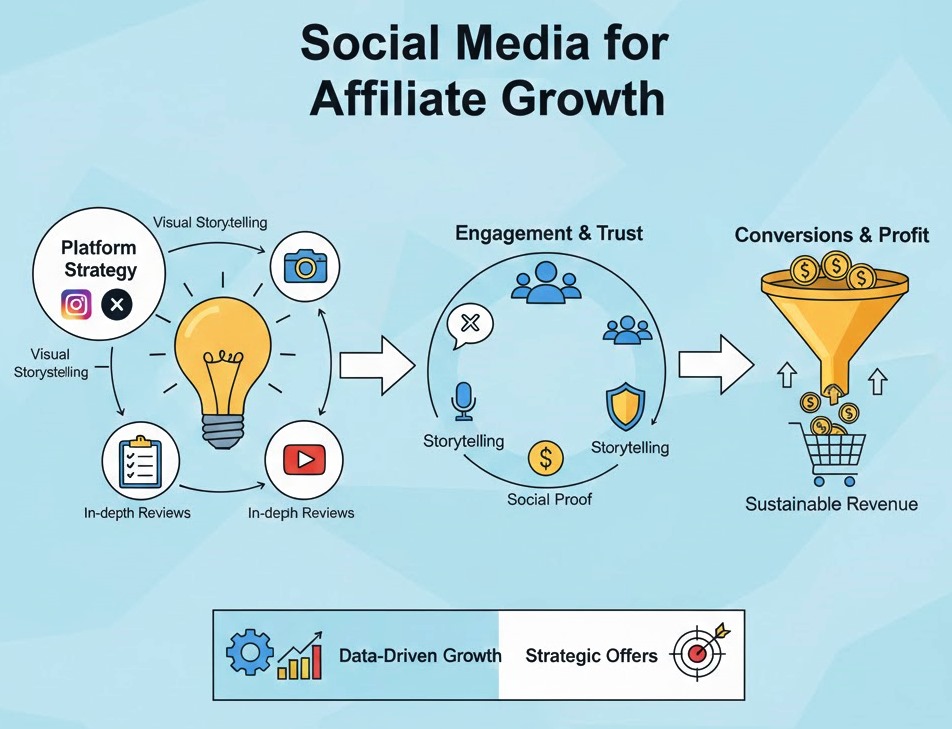
This guide will outline proven methods to help you use social media to grow a sustainable affiliate business and convert followers into loyal buyers.
- Define a Clear Audience and Platform Strategy
Not all platforms attract the same demographics or support the same content formats. Successful affiliate marketers identify their target audience and choose platforms that naturally complement their niche and communication style.
Examples:
- Instagram and TikTok: visual storytelling, short-form content, lifestyle niches
- YouTube: tutorials, product reviews, in-depth explanations
- X (Twitter): insights, industry commentary, thought leadership
- Facebook: communities, groups, long-form posts, older demographics
Instead of trying to “be everywhere,” focus on one or two platforms where your ideal audience is most active.
Ask yourself:
- Who am I trying to reach?
- Where do they spend time online?
- What content formats do they consume most?
Strategic alignment increases reach, engagement, and conversion efficiency.
- Create Valuable Content That Educates, Engages, and Persuades
The most effective affiliate marketers treat their platforms as learning environments, not sales channels.
High-performing social content typically does one or more of the following:
- Teaches a useful skill
- Solves a specific problem
- Offers a quick win or actionable tip
- Shares a success story or transformation
- Provides insight, analysis, or recommendations
Examples of content formats that drive engagement:
- “How-to” tutorials
- Short educational videos
- Step-by-step threads
- Before/after results
- Product comparisons
- Myth-busting posts
When audiences associate your profile with reliable knowledge, they will naturally trust your product recommendations.
- Incorporate Storytelling to Build Emotional Connection
While educational content establishes credibility, storytelling drives emotional engagement—which is critical for purchase decisions.
Effective stories include:
- A relatable challenge
- A journey toward improvement
- A clear outcome or transformation
Examples:
- How a tool saved time or improved results
- How a course helped someone start earning online
- How a strategy reduced stress or improved lifestyle
Consumers buy when they feel understood, not when they feel pressured.
Stories reduce skepticism, humanize your brand, and make products more relatable and meaningful.
- Use Calls to Action That Feel Natural, Not Forced
Many beginners avoid CTAs entirely because they fear sounding “salesy,” while others push overly aggressive offers that hurt credibility.
Effective CTAs are:
- Helpful
- Contextual
- Benefit-driven
Examples:
- “If you want a tool that automates this process, I use X—link in bio.”
- “I’ve put together a full guide with templates here.”
- “You can try this course with a free trial—details below.”
A good CTA shows readers how to make progress, not just what to buy.
- Leverage Social Proof to Increase Trust and Conversions
Social media thrives on visible validation. People are influenced by what others use, recommend, and celebrate.
Forms of social proof that work well:
- Testimonials
- Screenshots of results (authentic, not exaggerated)
- Video reviews
- User-generated content
- Influencer endorsements
Social proof matters because:
- It reduces perceived risk
- It encourages action
- It reinforces credibility
Even small wins—when presented honestly—can significantly increase trust.
- Stay Consistent and Data-Driven
Social media success is not about viral luck—it is about consistent, optimized performance over time.
Key performance indicators (KPIs) to track:
- Engagement rate
- Click-through rate
- Follower growth
- Conversion rate
- Saves/shares
The goal is not to “go viral,” but to steadily build a qualified audience with high purchasing intent.
Ask regularly:
- Which content gets the most engagement?
- What questions do followers ask most?
- Which posts lead to clicks or conversions?
Listening to your audience is more valuable than copying trends.
Final Thoughts: Treat Social Media as a Long-Term Asset
Social media offers extraordinary opportunities for affiliate marketers, but it requires patience, strategy, and value-driven communication.
If you focus on:
- Choosing the right platforms
- Creating useful and compelling content
- Telling meaningful stories
- Encouraging thoughtful action
- Using social proof authentically
- And iterating based on data
You will build an audience that trusts your expertise—and trusts your recommendations.
The most successful affiliate marketers understand that they are not just selling products—they are guiding people toward solutions they genuinely need.