Trust has become one of the most valuable currencies in digital marketing. With increased competition, rising consumer skepticism, and widespread exposure to misinformation, audiences are more selective than ever about the brands and voices they follow. For affiliate marketers, trust is not just a desirable trait—it is a foundational requirement for long-term profitability.
Audiences do not buy from strangers; they buy from sources that demonstrate credibility, expertise, and authenticity. Without trust, even the best product offers, content strategies, or marketing funnels will fail to produce consistent results.
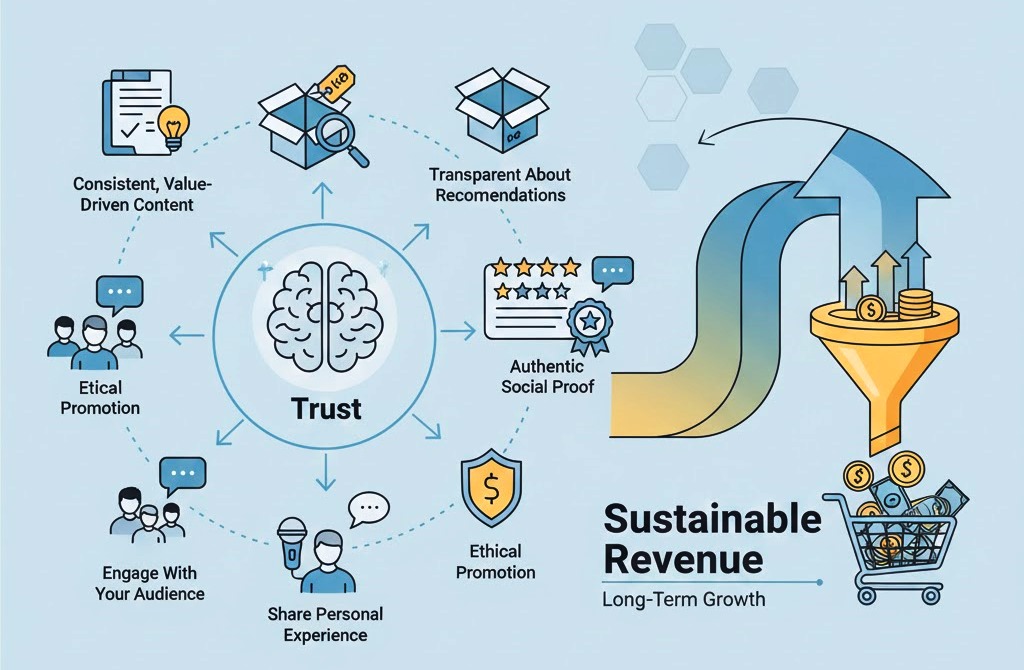
This guide outlines core principles and practical strategies to help affiliate marketers build and sustain trust with their audience, leading to higher engagement, stronger loyalty, and more sustainable revenue.
- Understand What Trust Means in a Digital Context
In affiliate marketing, trust is built when audiences believe that:
- You understand their needs
- You recommend solutions that genuinely help them
- You communicate transparently and ethically
Trust is earned over time through consistent behavior, not one-time persuasion. It reflects the relationship between credibility, reliability, and relatability.
The strongest affiliate brands are those perceived as helpful advisors, not salespeople focused solely on commissions.
- Deliver Consistent, Value-Driven Content
Consistency plays a crucial role in establishing credibility. Audiences are more likely to trust brands that show up regularly with practical, relevant, and actionable insights.
Characteristics of value-driven content:
- Educational rather than promotional
- Focused on solving problems
- Easy to understand and apply
- Tailored to audience needs
Examples:
- Tutorials
- Case studies
- Product comparisons
- How-to guides
- FAQs
When content helps audiences improve their lives, they naturally view the creator as a reliable, authoritative resource.
- Be Transparent About Recommendations and Affiliations
Consumers have become increasingly aware of affiliate marketing practices, and they appreciate honesty. Attempting to hide affiliate relationships can damage credibility and reduce conversions.
Best practices include:
- Disclosing affiliate links clearly
- Explaining how you selected products
- Emphasizing benefits and drawbacks
- Avoiding exaggerated claims
Transparency does not weaken conversions—it strengthens them. When audiences understand your intentions, they are more likely to trust your recommendations and act on them.
- Showcase Authentic Social Proof
Social proof provides evidence that your recommendations work in real-world contexts, reducing perceived risk and encouraging purchase decisions.
Types of social proof that build trust:
- Testimonials
- Verified user reviews
- Screenshots of results
- Case studies
- Influencer endorsements
However, authenticity is critical. Fabricated, exaggerated, or manipulated proof can severely damage reputation, especially in niches where skepticism is high.
Genuine social proof humanizes your brand and offers evidence-based credibility, rather than assumption-based persuasion.
- Share Personal Experience to Create Relatability
Audiences connect more deeply with humans than with brands. Sharing personal experience—whether success, failure, or lessons learned—helps your audience understand your perspective and motivations.
Examples:
- Mistakes you’ve made
- Struggles you overcame
- Tools you genuinely use
- Strategies that worked for you
Authentic storytelling builds emotional connection, which leads to:
- Higher engagement
- Stronger loyalty
- Increased willingness to purchase
People trust voices that feel real, not perfect.
- Prioritize Ethical Promotion Over Short-Term Gains
Affiliate marketers sometimes fall into a trap of prioritizing quick wins, recommending low-quality products in exchange for high commissions. While this may produce short-term revenue, it destroys long-term trust.
Ethical promotion includes:
- Recommending worthwhile products
- Providing balanced reviews
- Setting realistic expectations
- Avoiding manipulative language
Audiences value honesty—even when it means acknowledging limitations or drawbacks. Ethical marketing signals that you prioritize audience interest over personal profit.
- Engage With Your Audience Directly
Trust grows when audiences feel seen, heard, and valued. Engaging with them through comments, messages, or community spaces strengthens relationships.
Benefits of engagement:
- Clarifies audience needs
- Demonstrates accessibility
- Builds community loyalty
Even simple interactions can transform casual followers into dedicated supporters.
Final Thoughts: Trust Is the Engine of Sustainable Growth
In affiliate marketing, products change, algorithms shift, and platforms evolve—but trust remains the ultimate competitive advantage.
Trust is built through:
- Consistency
- Transparency
- Authenticity
- Ethical behavior
- Direct engagement
- Value-driven content
When audiences view you as a reliable guide, they follow your recommendations with confidence. This leads not only to higher conversions, but also to long-term brand equity and sustainable revenue.
Ultimately, affiliate marketing is not about promoting products—it is about helping people make better decisions.
Brands that keep this principle at the core of their strategy will continue to grow, regardless of trends or economic conditions.