Introduction: Why Content Marketing Is Essential for Affiliate Success
In an increasingly competitive digital landscape, affiliate marketers must differentiate themselves from hundreds of similar voices promoting the same products. Content marketing has become one of the most effective strategies to build authority, attract qualified traffic, and convert audiences into loyal buyers. Unlike paid ads that disappear when the budget stops, content provides compounding long-term results. When applied strategically, it can transform an average affiliate site or social channel into a scalable profit engine.
This article explores how affiliate marketers can leverage content marketing to drive higher conversions, build trust, and establish a sustainable business that continues to grow over time.
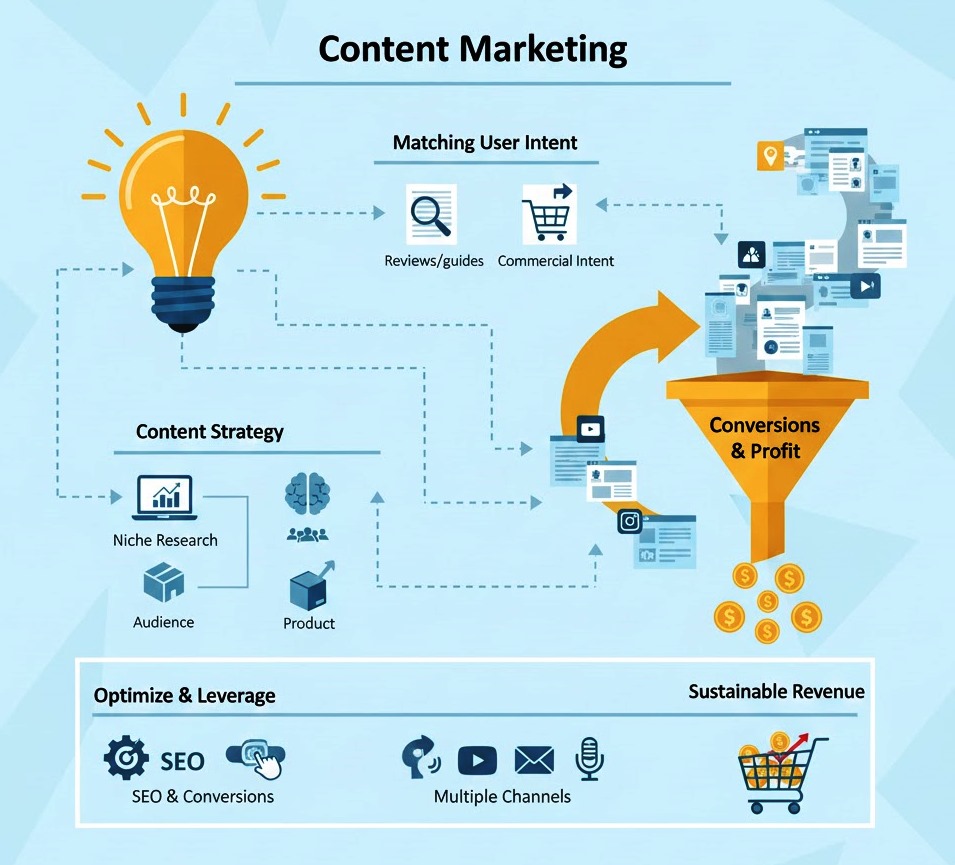
- Why Content Marketing Works for Affiliate Marketers
Content marketing is uniquely aligned with affiliate marketing goals because it focuses on informing, educating, and persuading audiences rather than aggressively selling. High-quality content:
- Generates free, targeted organic traffic
- Builds trust and authority within a niche
- Influences purchase decisions naturally
- Encourages repeat visits and referrals
- Creates monetization opportunities across multiple channels
When people trust your content, they are more likely to click your affiliate links and purchase recommended products.
- Choose Content That Matches User Intent
Successful affiliate marketers understand that every piece of content must align with what the audience is searching for. The most profitable affiliate content focuses on commercial or transactional intent, such as:
- Product reviews
- Product comparisons
- “Best of” lists
- Tutorials featuring a product
- Buying guides
These content formats attract people who are already considering a purchase, making conversions more likely.
However, including informational content is also valuable. Topics such as “how-to” articles and beginner guides help people enter your funnel earlier and trust your brand over time.
- Develop a Content Strategy Based on Your Niche
A strong content strategy begins with clearly defined niche goals. Ask:
- Who is your audience?
- What problems do they need solved?
- What products solve those problems?
- How competitive is the niche?
For example, if you target small business owners interested in digital tools, your content strategy might include:
- Tutorials on automation tools
- Reviews of popular SaaS platforms
- Lists of best online business resources
- Practical marketing tips
The more tailored your content is to a specific audience, the easier it becomes to establish authority and drive conversions.
- Create Content That Sells Without Feeling Salesy
Modern audiences are resistant to heavy sales pitches. The best affiliate content subtly guides the reader toward taking action by highlighting product value, outcomes, and real-world applications.
Effective content should:
- Address a specific pain point
- Provide actionable, useful information
- Introduce the product as a solution
- Demonstrate benefits clearly
- Include strategic calls to action
Instead of saying, “Buy this product now,” you might say:
“If you’re looking for an easy way to automate this process, Product X can help you save time and improve results.”
It feels more natural and helpful, increasing trust.
- Optimize Content for Search Engines and Conversions
SEO is critical for long-term affiliate success. Optimizing your content allows you to attract consistent traffic without relying on paid ads.
Key SEO elements include:
- Keyword optimization
- Search-friendly headlines
- Fast-loading pages
- Internal linking
- User-friendly formatting
Additionally, optimize your content for conversions:
- Add clear call-to-action buttons
- Use comparison tables
- Insert affiliate links naturally
- Include persuasive visuals
- Highlight testimonials or results
A well-designed article can double or triple your conversion rate.
- Leverage Multiple Content Channels
While a blog is often the foundation, content marketing for affiliate businesses can also include:
- YouTube videos
- Email newsletters
- Social media posts
- Short-form video
- Podcasts
Repurposing content helps reach new audiences without creating everything from scratch. For example, a product review article can become a YouTube review video, an Instagram carousel, and a short TikTok snippet.
Each channel expands visibility and strengthens brand recognition.
- Track Performance and Improve Over Time
Effective content marketing requires continuous optimization. Monitor performance metrics such as:
- Organic traffic
- Click-through rate (CTR)
- Conversion rate
- Time on page
- Revenue per article
Identify what content drives the most sales, then:
- Improve top-performing articles
- Expand related topics
- Create similar content formats
Small improvements, made consistently, compound into substantial gains over time.
Conclusion: Content Is the Foundation of a Sustainable Affiliate Business
Content marketing is not a quick fix, but a long-term strategy designed to build authority, generate consistent traffic, and increase affiliate revenue. By creating valuable, search-optimized content that answers user questions and guides them toward the right products, affiliate marketers can significantly improve both reach and profitability.
When executed consistently, content marketing becomes an asset that continues to generate leads, clicks, and commissions—long after the initial work is done.