Introduction: Why Email Marketing Remains a Critical Channel for Affiliate Marketers
In a digital environment dominated by rapidly changing algorithms and increasingly competitive advertising costs, email marketing remains one of the most dependable channels for affiliate marketers. Unlike social media platforms or search engines, email lists are owned assets, meaning no platform can restrict your access to your subscribers. More importantly, email marketing consistently produces one of the highest returns on investment in the industry, with multiple studies reporting an average ROI of $30–$40 for every dollar spent.
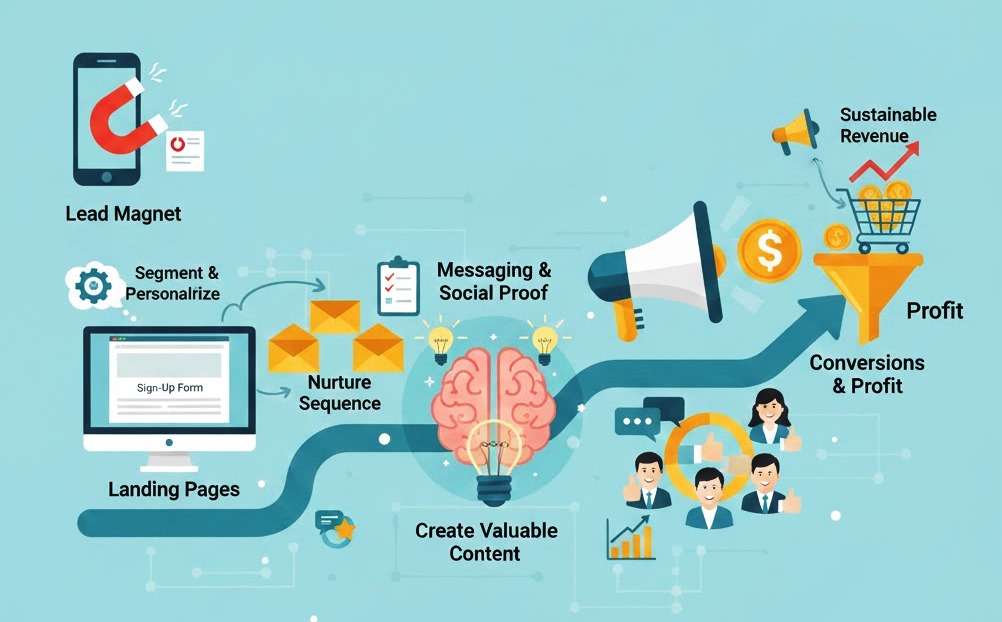
Building an engaged email list allows affiliate marketers to communicate directly with potential buyers, promote relevant products, nurture long-term relationships, and generate recurring sales. This article outlines a strategic, professional approach to list building and email monetization tailored to affiliate marketing success.
- Why Email Marketing Works So Well for Affiliate Businesses
Email marketing is particularly effective for affiliate marketers because it targets users who have already demonstrated interest in a topic, product, or solution. When someone joins your list, they are granting permission to be contacted—and that permission is powerful. Email allows affiliates to:
- Deliver personalized recommendations
- Promote offers repeatedly without relying on paid ads
- Build credibility through valuable insights
- Introduce new products efficiently
- Automate sales with minimal ongoing effort
The combination of relevance, trust, and convenience makes email a high-converting channel compared to cold traffic.
- Create a Valuable Lead Magnet That Solves a Real Problem
The first step in building an email list is attracting subscribers with a compelling reason to sign up. A “lead magnet” should address a specific challenge or goal that resonates with your audience. Effective lead magnets include:
- Free guides or eBooks
- Checklists
- Templates
- Mini-courses
- Discount codes
In affiliate marketing, your lead magnet should align with the products you plan to promote. For example, if you promote marketing tools, a “Content Strategy Checklist” will attract individuals who are more likely to purchase software or training in the future.
- Use a High-Converting Landing Page
A lead magnet is useless unless your landing page persuades people to sign up for it. A strong landing page offers:
- Clear headline with benefit
- Short explanation of value
- Simple sign-up form
- Visuals that support the message
- A bold call to action
Avoid long, confusing pages. Keep the structure clean, concise, and benefit-driven. Test headlines, call-to-action buttons, and imagery to improve performance over time.
- Segment Your Audience to Increase Conversions
Not all subscribers share the same needs, interests, or buying behavior. Segmenting your list enables you to send personalized messages that match the subscriber’s intent. Useful segmentation strategies include:
- Interests or topic preferences
- Skill level or experience
- Behavior (clicks, downloads, purchases)
- Demographic data
For affiliate marketers, segmentation ensures that subscribers receive offers they are more likely to engage with, which increases both click-through rates and conversions.
- Send Content That Builds Trust and Drives Action
Email marketing is not just about promoting products; it is about nurturing relationships. Subscribers should feel that each message provides value, whether or not they click an affiliate link. Strong email content should be:
- Educational
- Actionable
- Insightful
- Friendly, yet professional
You can incorporate affiliate links naturally into:
- Tutorials
- Case studies
- Product comparison emails
- “How-to” breakdowns
- Personal stories
The goal is to guide subscribers toward solutions, not simply push them toward purchasing.
- Automate Your Email Funnel for Passive Income
Automation is one of the most powerful aspects of email marketing. A well-developed email sequence can transform new subscribers into paying customers automatically. A basic affiliate automation funnel includes:
- Welcome email
- Value-driven educational email
- Product introduction with light recommendation
- Case study or proof
- Strong offer with clear call to action
Automation ensures consistent, scalable revenue without requiring constant manual outreach.
- Track Performance and Optimize for Better Results
Like any marketing strategy, email list building requires ongoing optimization. Monitor metrics such as:
- Open rate
- Click-through rate
- Conversion rate
- Unsubscribe rate
- Revenue per subscriber
Test different subject lines, content formats, and offer placements to pinpoint what resonates best with your audience. Even small improvements—such as increasing CTR by 1–2%—can significantly impact long-term revenue.
Conclusion: Email Remains the Most Reliable Sales Engine for Affiliate Marketers
While social platforms and content strategies play an important role in affiliate marketing, email remains the most reliable channel for converting leads into consistent revenue. By building a quality list, segmenting subscribers intelligently, and nurturing them with helpful information and relevant offers, affiliate marketers can create a stable, predictable sales system.
The result is a long-term asset that continues generating income regardless of trends, algorithm changes, or advertising fluctuations—making email marketing not just useful, but essential for any serious affiliate business.