Introduction: Why Strategic Content Is Critical for Affiliate Success
In an increasingly competitive digital marketplace, simply publishing content is no longer enough to stand out or generate affiliate revenue. With millions of blog posts, videos, and social updates published every day, audiences are overwhelmed with information and selective about what they engage with. As a result, affiliate marketers must focus on creating high-quality, strategic content designed not only to attract traffic but to guide users toward purchase decisions.
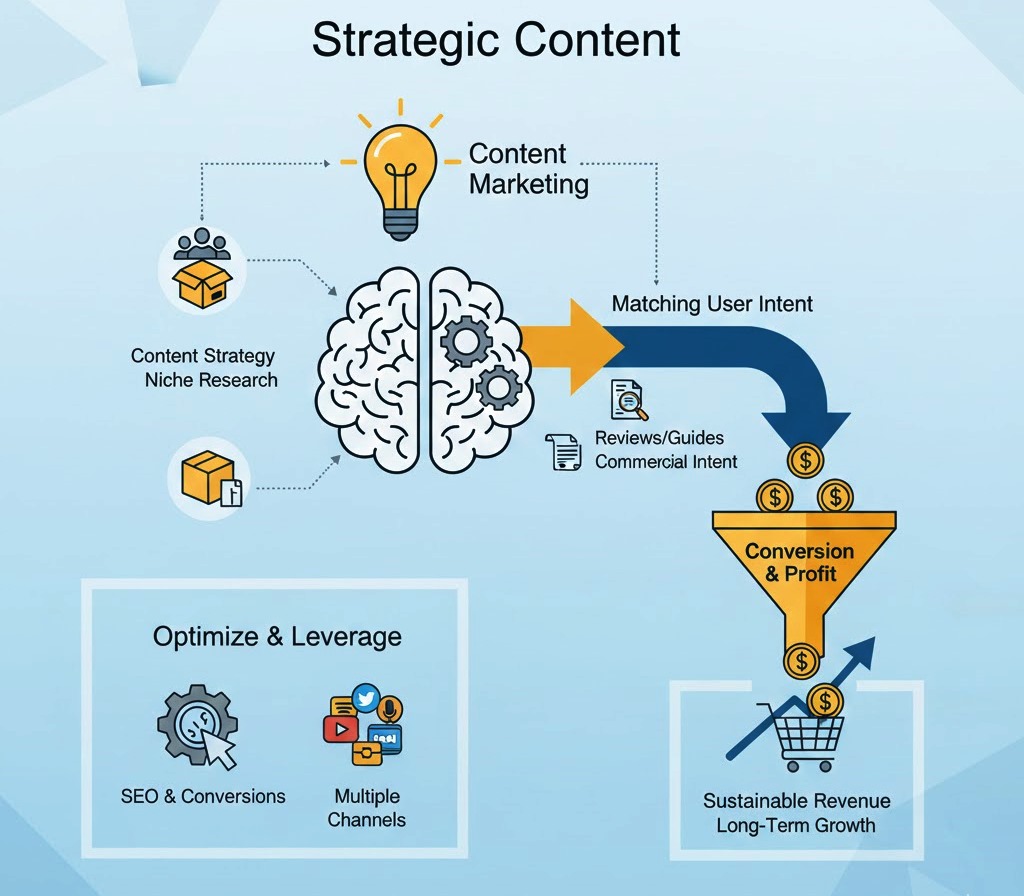
A well-executed content strategy helps affiliate marketers build authority, influence buyer intent, rank for valuable keywords, and nurture audiences through the decision-making process. Instead of chasing short-term clicks, strategic content prioritizes sustainable growth and profitable outcomes. This article outlines how affiliate marketers can develop an effective content strategy tailored to driving conversions.
- Understand Your Audience and Their Buying Journey
Effective content begins with a clear understanding of whom you are targeting and where they are in their buying journey. Affiliate marketers should focus on answering key questions, such as:
- What problems does my audience need solved?
- How urgent is the need?
- What solutions are they already considering?
- What objections or fears might stop them from buying?
Audience insight helps you create content that resonates emotionally and logically. It also allows you to produce messaging that addresses both awareness and conversion needs.
- Choose Affiliate Products that Support Content Goals
For content to convert effectively, it must be aligned with the value of the product being recommended. Selecting the right affiliate offers is a strategic decision. Ideal products should:
- Solve a clear problem
- Offer attractive commissions
- Provide social proof or positive reviews
- Have a stable market demand
- Fit your brand and audience
Promoting low-value products or poorly matched solutions will undermine your authority and reduce conversion rates.
- Build Content Clusters Around Relevant Topics
Modern SEO favors topical depth over keyword stuffing. Instead of producing random standalone posts, affiliate marketers should create content clusters—interconnected pieces that cover a topic comprehensively.
A content cluster consists of:
- Pillar content (comprehensive guide)
- Supporting articles (how-to tutorials, comparisons, lists)
- Internal links connecting every piece
For example, if you promote email marketing software, you could build a cluster around:
- How to build an email list
- Best email tools and platforms
- Step-by-step setup tutorials
- Case studies and success stories
This structure improves search visibility, builds authority, and increases the likelihood users click through multiple posts—boosting revenue potential.
- Create High-Intent Content that Drives Conversions
Not all content performs equally. For affiliate marketing, high-intent content—targeting users close to making a purchase—is particularly effective. Examples include:
- Product reviews
- Side-by-side comparisons
- Best-of lists
- Pricing breakdowns
- Tutorials featuring tools
Users searching for these keywords have stronger buying intent. When optimized with clear calls to action, they consistently outperform generic educational content in conversion rates.
- Incorporate CTA Placement Strategically
Affiliate content should guide the reader toward the solution naturally. Calls to action should be visible but not overly aggressive. High-performing strategies include:
- Contextual links within body text
- Buttons after key sections
- Final CTA at the end of the article
- Comparison tables with direct links
The objective is to make clicking the affiliate link feel like the logical next step—not forced or manipulative.
- Leverage Multiple Content Formats to Expand Reach
While blog posts are core to many affiliate strategies, diversifying formats amplifies visibility and conversions. Effective formats include:
- Short-form videos
- Long-form YouTube tutorials
- Infographics
- Newsletters
- Social carousel posts
Each format plays a role in building awareness, credibility, and engagement. Content repurposing ensures consistent messaging without doubling workload.
- Analyze Performance and Iterate Over Time
Data is essential for refining your affiliate content strategy. Key performance indicators include:
- Organic search traffic
- Click-through rate (CTR)
- Conversion rate
- Time on page
- Bounce rate
- Revenue per visitor
High-traffic posts with low conversions may need stronger CTAs or clearer product explanations. Low-traffic posts may need better keyword targeting or internal linking. Optimizing content over time often generates better long-term results than constantly publishing new work.
Conclusion: Strategic Content is the Engine Behind Affiliate Profitability
Affiliate marketing is no longer about posting generic reviews or forcing links into articles. The most successful affiliates treat content as a business asset—designed to attract, educate, and convert audiences. By understanding your audience, selecting strong products, building topic clusters, and optimizing for conversions, you create a scalable system that produces results long after content is published.
A professional content strategy not only increases traffic but improves subscriber trust and long-term revenue, helping affiliate marketers build sustainable profitability in a crowded digital landscape.