Email marketing remains one of the most powerful channels for affiliate marketers, consistently outperforming social media and paid ads in terms of engagement, conversion rate, and long-term customer value. While platforms change, algorithms shift, and traffic sources become unpredictable, an email list provides direct access to an audience that already trusts your message and is interested in your solutions.
However, many beginners overlook email marketing or delay building a list because they perceive it as complex, time-consuming, or unnecessary. In reality, a well-designed email strategy allows marketers to build sustainable, predictable revenue while reducing dependency on external platforms.
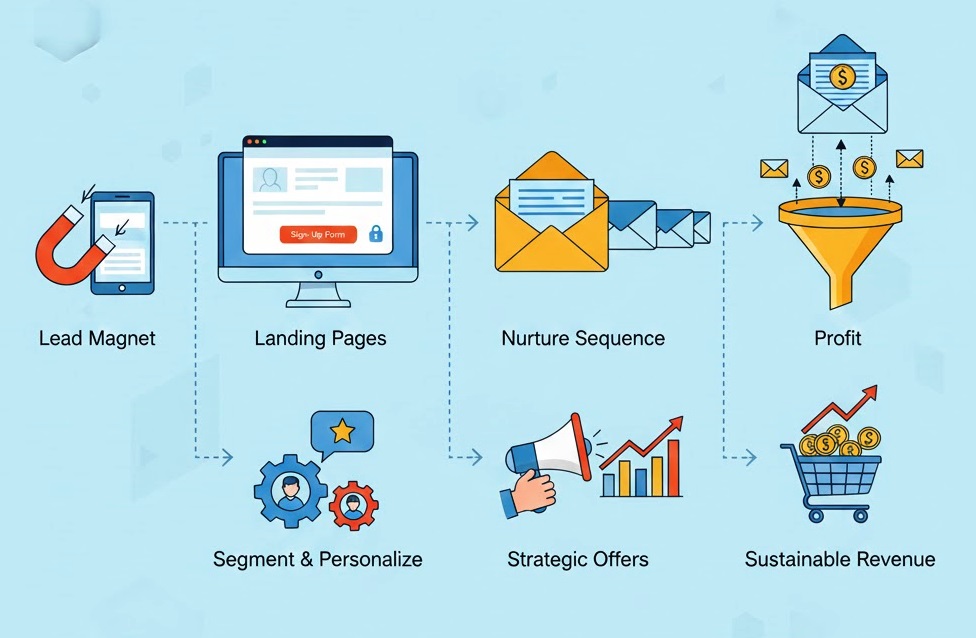
This guide outlines key principles for building an effective email list, nurturing subscribers, and leveraging email as a profitable component of your affiliate business.
- Understand Why Email Is Essential for Affiliate Marketing
Email remains one of the most profitable marketing channels because it enables direct, personalized communication with an audience that has already expressed interest.
Email marketing supports:
- Higher conversion rates
- Lower customer acquisition costs
- Segmentation and personalization
- Long-term relationship building
- Cross-promotion without algorithm limitations
Studies consistently show email converting at a rate significantly higher than most social platforms, especially when subscribers receive relevant, value-driven messages tailored to their needs.
For affiliate marketers, this translates into repeat conversions, consistent revenue, and long-term stability, even in a rapidly changing digital landscape.
- Create a Lead Magnet That Solves a Specific Problem
To build a list, you must offer a compelling incentive that motivates visitors to exchange their email address for value. This incentive—often called a lead magnet—should address a specific, high-priority problem within your niche.
Effective lead magnets include:
- Short guides or ebooks
- Checklists or templates
- Case studies
- Mini video tutorials
- Free tools or resources
- Discounts or exclusive access
A powerful lead magnet is:
- Specific, not generic
- Actionable, not theoretical
- Outcome-driven, not promotional
For example:
- “5 templates to automate social media content”
is more appealing than - “Social media marketing tips”
The goal is to generate quick wins that build trust, not just collect emails.
- Use Optimized Landing Pages to Drive Sign-Ups
Your lead magnet should be delivered through a dedicated landing page, not a generic homepage or blog post.
Effective landing pages are:
- Simple, focused, and visually clean
- Persuasive (benefit-oriented, not feature-heavy)
- Structured with clear hierarchy and minimal distraction
Elements of a high-performing landing page:
- Strong headline that communicates value
- Brief, benefit-driven description
- Clear visual or preview of the lead magnet
- Simple email form
- Trust indicators (optional)
The fewer the fields, the higher the conversion rate.
In most cases:
- Email only → higher sign-ups
- Email + name → lower sign-ups, slightly better personalization
Choose based on your goals—but prioritize ease and clarity.
- Create a Nurture Sequence That Builds Trust Before Selling
Once subscribers join your list, the next step is to nurture the relationship before promoting offers. Many beginners rush directly into sales, which often results in low conversions and high unsubscribe rates.
An effective nurture sequence:
- Welcomes new subscribers
- Sets expectations
- Delivers actionable lessons or insights
- Shares stories or success examples
- Gradually introduces relevant solutions
The tone should be:
- Helpful, not aggressive
- Conversational, not robotic
- Value-first, not promotional
Once trust is established, product recommendations feel like logical next steps rather than intrusive sales messages.
- Use Segmentation and Personalization to Increase Relevance
Segmentation allows you to categorize subscribers based on their interests, behaviors, or goals. Personalization then tailors content to match their specific needs.
Segmentation can be based on:
- Lead magnet topic
- Engagement level
- Content preferences
- Purchase history
Personalization can include:
- Customized recommendations
- Targeted product suggestions
- Tailored content sequences
Even simple segmentation can significantly increase:
- Open rates
- Click-through rates
- Conversion rates
Generic messaging is easy to ignore. Tailored messaging feels valuable.
- Promote Affiliate Offers Strategically and Ethically
Email marketing gives you a powerful channel for affiliate promotion—but the strategy should always be aligned with value, transparency, and trust.
Best practices:
- Promote offers that genuinely help your audience
- Explain benefits clearly and honestly
- Provide context, examples, and outcomes
- Use “soft-sell” messaging that focuses on progress
Examples of effective promotional angles:
- Recommendations based on subscriber needs
- Case studies showing real results
- Bonuses or exclusive resources
- Tutorials demonstrating product usage
Transparent messaging builds credibility and long-term loyalty, which increases revenue over time.
Final Thoughts: Email Is a Long-Term Asset, Not a Quick Fix
Email marketing is one of the most stable and profitable assets an affiliate business can build. It supports higher conversions, deeper relationships, and consistent revenue—even when traffic sources change or external platforms evolve.
To succeed, focus on:
- Building a list with a valuable lead magnet
- Designing high-converting landing pages
- Nurturing subscribers with meaningful content
- Segmenting and personalizing messages
- Promoting offers ethically and strategically
When executed properly, email marketing becomes more than a promotional tool—it becomes a competitive advantage that supports sustainable, long-term growth